
From Local to National: How to Prepare Your Packaging for Retail Distribution
There is a particular kind of pride that comes with hand-filling your hundredth bottle at the kitchen counter, sealing it, and handing it to a customer who drove across town just for your product. That intimacy is the heart of a side hustle. But the moment a regional grocery buyer asks whether you can supply forty stores, or a national chain requests a vendor packet, the rules of the game change entirely. The container that served you beautifully at the farmers market may not survive a cross-country freight journey, may not scan correctly at a checkout terminal, and may not satisfy the compliance requirements that big-box retailers enforce without exception.
Preparing your packaging for retail distribution is one of the most underestimated steps in scaling a brand. Founders tend to obsess over the formula inside the bottle and treat the bottle itself as an afterthought, only to discover that packaging is precisely where retail relationships succeed or unravel. A product that arrives cracked, mislabeled, or improperly cased gets rejected at the receiving dock, and rejections are expensive in both dollars and reputation. This guide walks through the practical, factual considerations that separate a hobbyist’s packaging from packaging that is genuinely retail-ready, so your transition from local to national is built on a foundation that holds up under pressure.

Why Retail Distribution Demands More From Your Packaging
When you sell directly to consumers, your packaging only has to survive a short trip and look appealing on a single shelf or table. Retail distribution introduces a far longer and rougher chain of custody. Your product may travel from a co-packer to a distribution center, get palletized, shipped across several states, broken down into smaller cases, restocked by employees who are not gentle, and finally placed on a shelf where it competes with dozens of established brands.
Every link in that chain stresses your packaging in a different way. The container must endure vibration, compression, temperature swings, and repeated handling. It must also communicate instantly to a shopper who gives it roughly three seconds of attention. And it must satisfy the retailer’s internal standards, which often dictate everything from barcode placement to case-pack counts. Strong packaging is therefore not a cosmetic decision. It is the physical and informational interface between your brand and a supply chain that was designed for companies far larger than yours. Choosing the right glass containers or plastic containers early on prevents painful and costly redesigns later.

Durability: Your First Test on the Road to National
The single most common reason packaging fails in retail distribution is breakage during transit. A bottle that feels sturdy in your hand may shatter under the weight of stacked pallets or crack from the constant vibration of a long-haul truck. Before you commit to a national rollout, your packaging needs to prove it can travel.
Consider the following durability factors as you evaluate containers:
- Material strength. Glass offers a premium look and excellent product protection, but it is heavier and more prone to breakage, so it benefits from thicker walls and protective dividers. Plastic resins such as PET and HDPE are lighter, shatter-resistant, and frequently more economical to ship in volume.
- Wall thickness and base design. Heavier-weight glass and well-engineered plastic bases resist the compression that occurs when cases are stacked several high on a pallet.
- Closure integrity. A leaking cap ruins not just one unit but often the entire case around it. Pairing your container with a properly matched, leak-resistant closure is essential, and the right cap or closure depends on both your product and your neck finish.
- Secondary packaging. Corrugated cases, dividers, and shrink wrap protect primary containers from one another during the journey.
A smart, low-cost safeguard is sample testing. Ordering samples to run your own compatibility and transit tests before placing a large order lets you confirm that your product, container, and closure work together under realistic conditions. BottleStore.com allows entrepreneurs to request samples for exactly this kind of compatibility testing, which can spare you from discovering a flaw only after thousands of units have shipped.

Barcodes and Labeling: The Language of Retail
If durability is what gets your product to the shelf intact, labeling is what allows the retail system to recognize it at all. Modern retailers run on scannable data, and a barcode that fails to read is treated as a defect.
At the level of the individual sellable unit, retail products in the United States carry a UPC, a twelve-digit identifier displayed as a barcode that distinguishes one product from another and streamlines checkout. To obtain a UPC, you register with GS1 US, the official organization responsible for assigning UPCs in the United States. Placement matters: a UPC should sit in a clearly visible, flat, scannable area, and common label placements include the lower right corner or the back of the package.
Cases require a different code. ITF-14 barcodes are the most common data carrier for the GTIN-14 data structure and are used to mark cartons, cases, or pallets that contain products marked with UPC or EAN numbers; these 14-digit barcodes go on the outer shipping cartons that contain a set number of retail products. Major retailers are explicit about this distinction. Walmart’s fulfillment guidance, for example, instructs sellers to place a scannable GTIN or UPC label on each sellable unit and notably warns that the item barcode should not be placed on the master case; it belongs on the individual, sellable units only.
A few labeling practices protect you across nearly every retail channel:
- Verify before you print. Barcode size, quiet zones, contrast, and correct GTIN formatting all affect scanability, and even small layout changes can break a code. Keep the quiet zones clear and use dark bars on a light background.
- Mind the surface. Glossy finishes, foil, and embossing can reduce readability unless they have been tested, and codes should be placed on a flat area rather than across seams, curves, or closures.
- Test the printed result. Periodically scan your printed barcodes and replace worn printer heads, because a code that looks fine to the eye can still fail a verifier.
- Match the symbol to the level. EAN-13 or UPC-A is used for retail units, while ITF-14 or GS1-128 is used for cases.
It is worth noting that the industry is gradually moving toward richer on-pack data. Because the traditional EAN/UPC family of barcodes carries only the GTIN, the momentum for change toward more capable 2D barcodes is driven by the need to encode more data on-pack, such as batch and lot numbers and expiration dates, and to allow consumer engagement through links to web-enabled information. Curved bottles in particular can make linear barcodes hard to place, which is one more reason the container shape you select has direct labeling consequences.

Vendor Compliance: The Hidden Cost of Getting Packaging Wrong
One of the most jarring surprises for a founder entering national retail is the chargeback. Large retailers publish detailed supplier or routing guides that spell out exactly how products must be packaged, labeled, palletized, and delivered, and when a shipment deviates from those rules, the retailer deducts a penalty directly from the vendor’s invoice. These fines are not theoretical. Industry sources note that chargeback fees vary by retailer and violation but commonly range from roughly fifty dollars per infraction to thousands of dollars per shipment, and for a growing brand operating on thin margins, a handful of avoidable errors can erase the profit on an entire purchase order.
Packaging-related violations are among the most frequent triggers. Non-compliant carton sizes, missing dunnage, incorrect pallet configurations, and labels that fail to scan all create friction at the receiving dock, and retailers penalize that friction because it slows their own operations. Walmart’s On-Time-In-Full program is the most formalized example, applying a high compliance threshold to both delivery timing and order quantity and assessing a percentage penalty on the cost of goods for shipments that fall short. Target’s vendor program has grown similarly demanding, with expanded shipment-accuracy enforcement introduced in 2025. The lesson for an entrepreneur is that packaging decisions made at the workbench carry direct financial consequences several links down the supply chain.
The encouraging news is that compliance is largely controllable. Experienced operators recommend designing quality control around the highest-risk points, which for most brands means verifying that labels scan correctly, that carton contents match the shipping documentation, and that pallets are built to the retailer’s spec before a load ever leaves the building. A final compliance check before shipment is far less costly than a rejected load or a disputed deduction afterward. Keeping detailed records, photographing pallets and cartons, and running internal audits before shipping all help, and they also give you the documentation to dispute a chargeback issued in error. Treat compliance as a living program rather than a one-time setup, because new retailers bring new rules and every promotion or product change can alter your packaging obligations.
Shelf Impact: Earning the Three-Second Glance
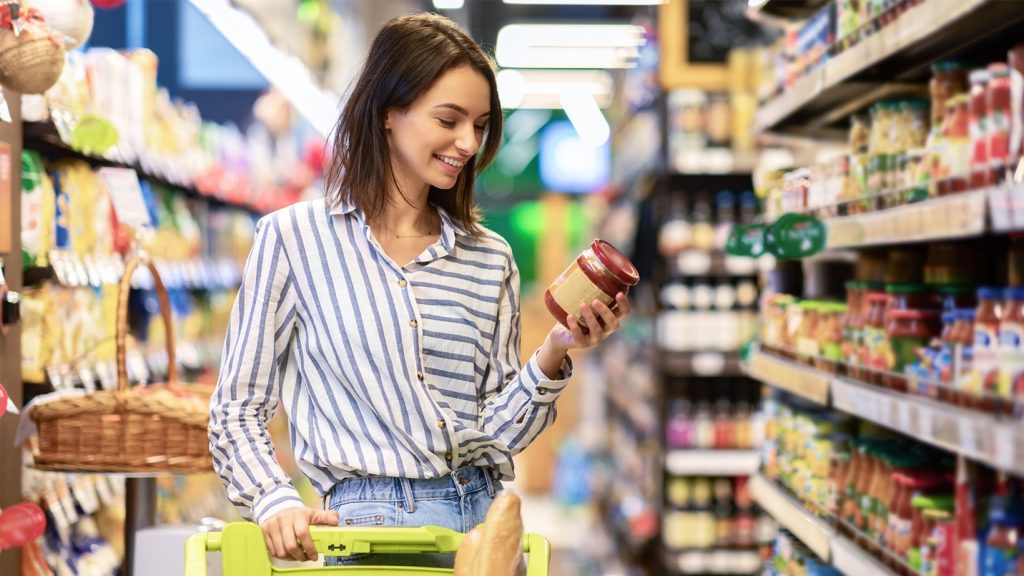
National distribution means your product no longer enjoys the captive audience of a market stall. It sits on a crowded shelf beside competitors with bigger budgets, and the shopper’s eye sweeps past in seconds. Packaging is your only salesperson in that moment.
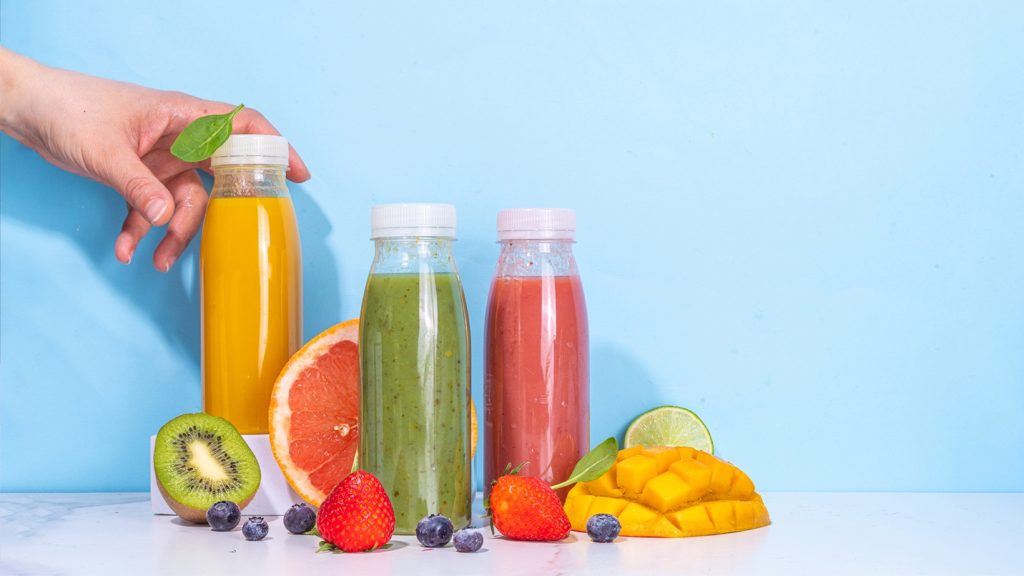
Container shape, color, and clarity all carry brand meaning. A faceted glass spirits bottle signals craft and premium positioning, while a clean PET cylinder communicates freshness for a cold-pressed juice or kombucha. Amber glass suggests apothecary heritage and also protects light-sensitive contents, which makes it a frequent choice for essential oil and dropper bottles. The container is not separate from your label design; it is the canvas the label lives on, and a distinctive silhouette can make a brand recognizable even from across an aisle.
When you move from local to national, consistency becomes critical. Shoppers who discovered you regionally need to recognize the same product in a different state. That argues for committing to a container family you can reliably source in volume, in consistent dimensions and colors, rather than improvising with whatever is available. BottleStore.com’s industry container catalog organizes options by category so you can identify a shape that fits both your product and your shelf-presence goals, whether you are in food and beverage, health and beauty, or home, industrial, and hospitality.
Real Brands That Built National Recognition Through Packaging
The clearest lessons come from brands whose packaging became inseparable from their identity. Bragg, the maker of apple cider vinegar and a fixture of the natural-foods movement for decades, is a useful study in glass-bottle consistency. Bragg’s apple cider vinegar is instantly recognizable by its tall amber-glass bottle and its dense, text-heavy label, a look the brand has preserved with remarkable discipline as it expanded from health-food stores into mainstream national grocery chains. That visual constancy is precisely what allows a shopper who first bought the product in a small co-op to spot it immediately in a large supermarket hundreds of miles away. Bragg demonstrates that resisting the temptation to constantly redesign can be a competitive advantage, because recognition compounds over time.
Health-Ade Kombucha offers a more recent example built on glass. The brand started small at a Southern California farmers market and scaled into national retail distribution, and throughout that growth it committed firmly to glass bottles rather than plastic. The choice carries real trade-offs, since glass is heavier and more fragile in transit, but Health-Ade leaned into glass as a signal of quality and taste preservation for a fermented product, pairing it with a colorful, illustrative label system that stands out in the crowded refrigerated beverage set. Their packaging shows how a deliberate material decision can become part of the brand promise itself rather than a mere container choice.
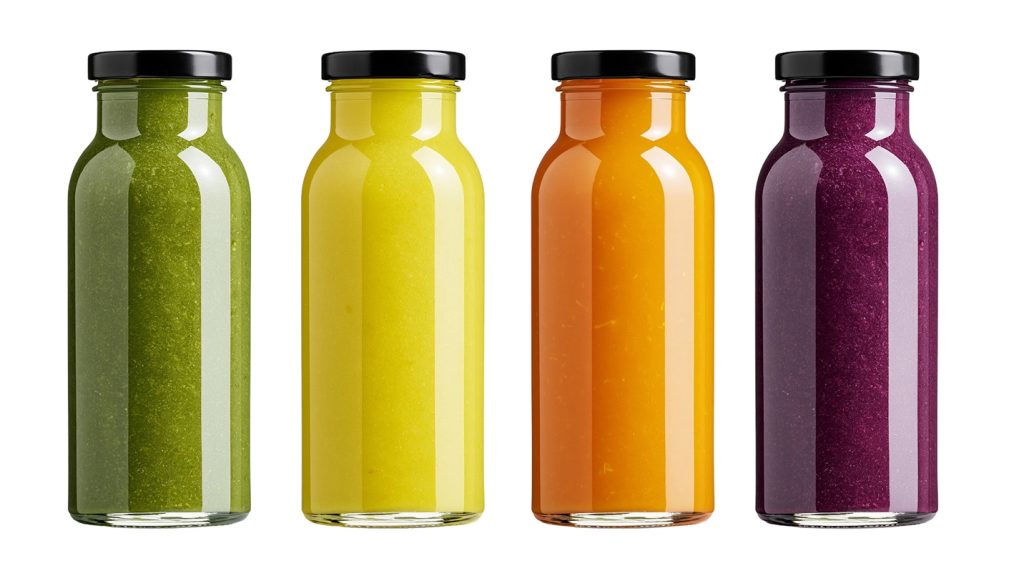
If your category does not have an obvious comparable brand to emulate, the practical move is to start from the container that fits your product’s physical and shelf requirements and build outward. For a cold-pressed juice or cold brew, for instance, the classic Boston round and PET cylinder beverage bottles carried by BottleStore.com provide the reusable, recognizable silhouette that beverage shoppers already associate with freshness, giving a new brand a credible starting point without reinventing the wheel.
Sustainability as a Shelf Advantage, Not an Afterthought
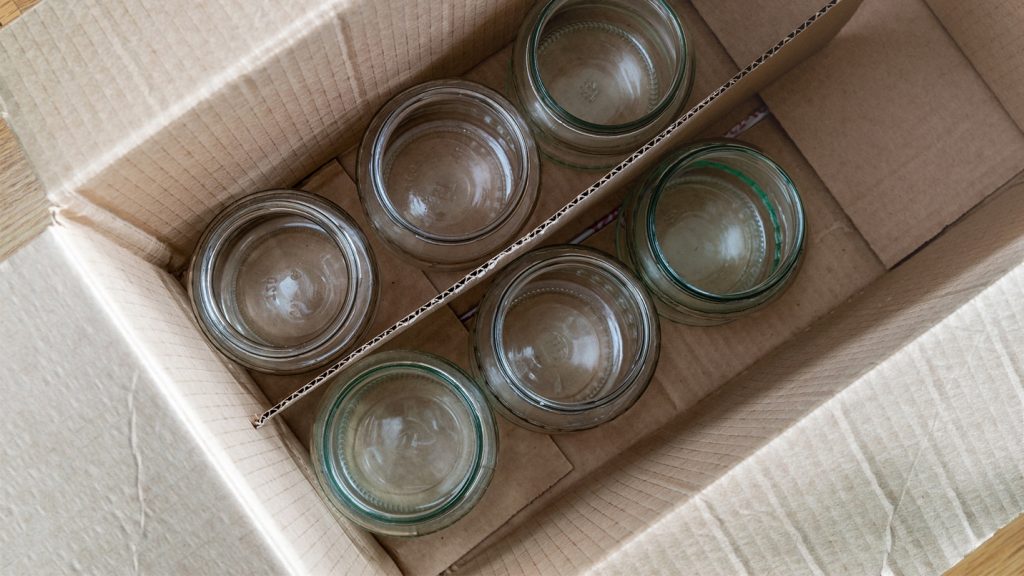
As your brand reaches a national audience, sustainability shifts from a nice-to-have to a genuine point of difference, and increasingly to a regulatory reality. Consumer research has found that a large majority of shoppers now factor sustainability into their packaging choices, and a meaningful segment is willing to pay a premium of roughly fifteen to twenty-five percent for packaging that is both eco-friendly and aesthetically distinctive, a dynamic especially pronounced in beverages, cosmetics, and artisanal foods. Glass is frequently favored in this context for its infinite recyclability and its lack of microplastic shedding, while demand for post-consumer recycled content is climbing on the plastic side as well, with the PCR plastic packaging market valued in the tens of billions of dollars and projected to grow strongly through the next decade.
For an entrepreneur, the practical takeaway is to weave sustainability into your container strategy early rather than bolting it on after a redesign. That might mean choosing recyclable glass that signals quality and circularity, or specifying recycled-content plastic where weight and breakage are concerns. BottleStore.com carries a dedicated selection of recycled plastic bottles and jars made with post-consumer resin, as well as a broader range of sustainable health and beauty packaging, giving founders a route to credible eco-positioning without sacrificing retail durability. The reward is twofold: you align with where regulation and retail buyers are clearly heading, and you give shoppers one more reason to reach for your product over a less thoughtful competitor.
Sourcing and Consistency at Scale
A side hustle can tolerate buying a few cases of bottles at a time. A national brand cannot. Retail commitments mean purchase orders with fixed delivery dates, and a stockout of packaging is just as damaging as a stockout of product, because an empty shelf invites the retailer to give your facing to a competitor.
Three sourcing priorities deserve attention as you scale:
- Volume reliability. Confirm that your supplier can consistently furnish the same container, in the same specifications, in the quantities your retail orders demand. Inconsistent dimensions wreak havoc on automated filling and labeling lines.
- Lead times and logistics. Heavier orders change how product ships. Large bulk orders may move by freight rather than parcel, which affects both cost and timing, so build those realities into your production calendar.
- Domestic options. Sourcing containers made closer to home can shorten lead times and reduce supply-chain risk. BottleStore.com maintains a dedicated Made in North America selection of glass and plastic containers and closures for exactly this reason.
Working with a supplier that carries deep inventory across glass, plastic, and matching closures, and that backs orders with an intact-on-arrival guarantee, removes a great deal of the uncertainty from scaling. The goal is to make packaging the most predictable part of your operation rather than a recurring emergency.

Bringing It All Together
The journey from local favorite to national brand is not won by the product alone. It is won by packaging that survives the freight lane, scans flawlessly at the register, communicates your brand in three seconds, and arrives on schedule in the quantities your retail partners expect. Each of these demands compounds the others, which is why packaging deserves to be treated as a core strategic decision rather than a final detail.
Approach the transition methodically. Pressure-test your container for durability before you scale, get your UPC and case-level barcodes right and verified, choose a container shape and material that will still be recognizable three states away, and lock in a sourcing relationship that can keep pace with your growth. Brands like Bragg and Health-Ade did not stumble into national recognition; they made deliberate, consistent packaging choices and stuck with them. With the right containers, closures, and a partner like BottleStore.com behind your supply chain, your packaging can stop being the thing that holds you back and start being the thing that carries you forward.